
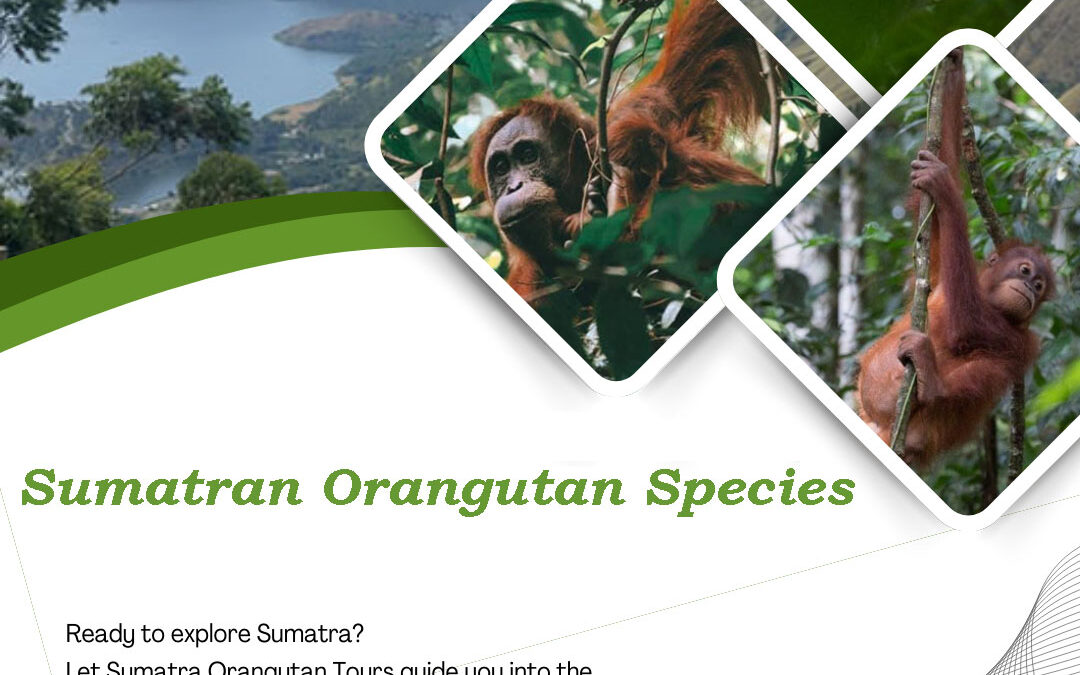
What Is the Sumatran Orangutan Species?
The Sumatran orangutan species (Pongo abelii) is a critically endangered great ape found only on the Indonesian island of Sumatra. Recognized for its intelligence, distinctive reddish-orange fur, and tree-dwelling lifestyle, the Sumatran orangutan is one of humanity’s closest living relatives, sharing approximately 97% of its DNA with humans.
Today, the majority of the remaining population survives within the forests of the Leuser Ecosystem in northern Sumatra, making this region one of the most important conservation areas on Earth.
Quick Facts About the Sumatran Orangutan Species
| Fact | Information |
|---|---|
| Common Name | Sumatran Orangutan |
| Scientific Name | Pongo abelii |
| Conservation Status | Critically Endangered |
| Location | Northern Sumatra, Indonesia |
| Habitat | Tropical Rainforest |
| Diet | Fruits, leaves, bark, insects, honey |
| Lifespan | 30–45 years |
| Population | Approximately 14,000 |
| Family | Hominidae |
| Closest Relative | Humans |
Why Is the Sumatran Orangutan Species Important?
The Sumatran orangutan is often referred to as a “forest gardener.” As they travel through the rainforest consuming fruits, they disperse seeds over large areas, helping maintain healthy forest ecosystems.
Without orangutans, many rainforest tree species would struggle to regenerate naturally.
This makes the Sumatran orangutan a keystone species for rainforest biodiversity and ecological balance.
Where Do Sumatran Orangutans Live?
The Sumatran orangutan species is found exclusively in northern Sumatra, Indonesia.
The most important habitat areas include:
- Gunung Leuser National Park
- Leuser Ecosystem
- Bukit Lawang
These rainforests provide food, shelter, nesting sites, and protection from predators.
Unlike many other great apes, Sumatran orangutans spend most of their lives high in the forest canopy.
What Does the Sumatran Orangutan Species Look Like?
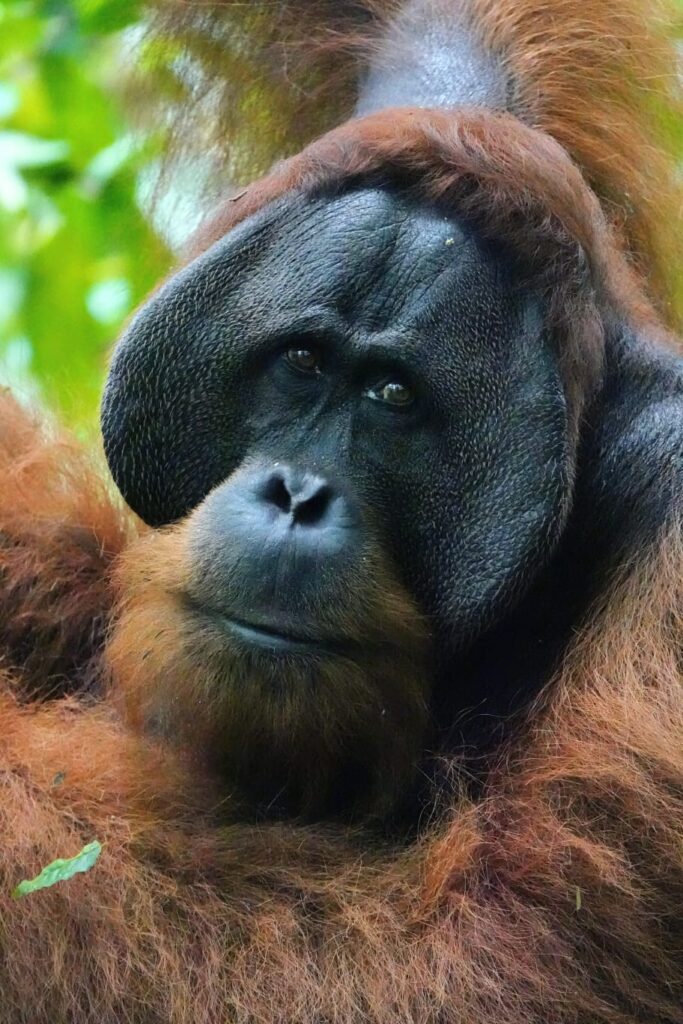
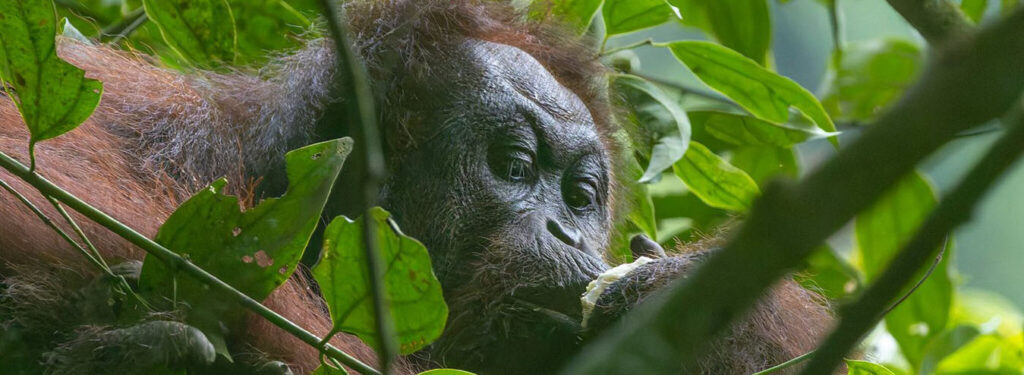
The Sumatran orangutan has several unique characteristics:
Physical Features
- Long reddish-orange hair
- Slim body structure
- Long arms reaching over 2 meters
- Highly flexible hands and feet
- Long facial hair
Adult Size
Male Orangutans
- Weight: 50–90 kg
- Height: Up to 1.5 meters
Female Orangutans
- Weight: 30–50 kg
- Height: Around 1.2 meters
Adult males often develop large cheek pads called flanges, used for attracting mates and signaling dominance.
What Do Sumatran Orangutans Eat?
The Sumatran orangutan species primarily consumes fruit.
Common foods include:
- Figs
- Durian
- Rambutan
- Mangosteen
- Jackfruit
- Young leaves
- Flowers
- Tree bark
- Honey
- Insects
During periods when fruit is scarce, orangutans adapt by eating alternative forest foods, Their varied diet helps support seed dispersal throughout the rainforest.
How Intelligent Are Sumatran Orangutans?
Scientists consider orangutans among the most intelligent animals in the world.
Research has documented:
- Tool use
- Problem-solving skills
- Long-term memory
- Cultural learning
- Communication through vocalizations and gestures
Wild orangutans have been observed using sticks to extract insects and seeds from difficult-to-reach locations.
Some populations even create makeshift tools from leaves.
What Is the Difference Between Sumatran and Bornean Orangutans?
Many travelers wonder how the Sumatran orangutan differs from its relatives.
| Feature | Sumatran Orangutan | Bornean Orangutan |
|---|---|---|
| Scientific Name | Pongo abelii | Pongo pygmaeus |
| Location | Sumatra | Borneo |
| Body Type | Slimmer | Larger |
| Social Behavior | More social | More solitary |
| Tree Use | Highly arboreal | Less arboreal |
| Population | Smaller | Larger |
The Sumatran species generally spends more time in trees and exhibits more social interactions than its Bornean counterpart.
Why Is the Sumatran Orangutan Critically Endangered?
The International Union for Conservation of Nature (IUCN) classifies the Sumatran orangutan as Critically Endangered.
Major threats include:
- Deforestation
- Illegal logging
- Palm oil expansion
- Human-wildlife conflict
- Infrastructure development
- Wildlife trafficking
Without continued conservation efforts, wild populations could decline significantly over future decades.
Population of Sumatran Orangutans
Current estimates suggest that approximately 14,000 Sumatran orangutans remain in the wild.
Most populations are concentrated within the Leuser Ecosystem, one of Southeast Asia’s most important biodiversity hotspots.
Protecting this ecosystem safeguards not only orangutans but also:
- Sumatran Tiger
- Sumatran Elephant
- Sumatran Rhinocero
Where to See the Sumatran Orangutan Species
The most famous destination for observing wild orangutans is:
Bukit Lawang
located on the edge of Gunung Leuser National Park, Bukit Lawang offers:
- Ethical jungle trekking
- Wildlife observation
- Multi-day rainforest adventures
- Expert local guides
- Sustainable ecotourism experiences
Visitors frequently encounter:
- Wild orangutans
- Thomas leaf monkeys
- Long-tailed macaques
- Gibbons
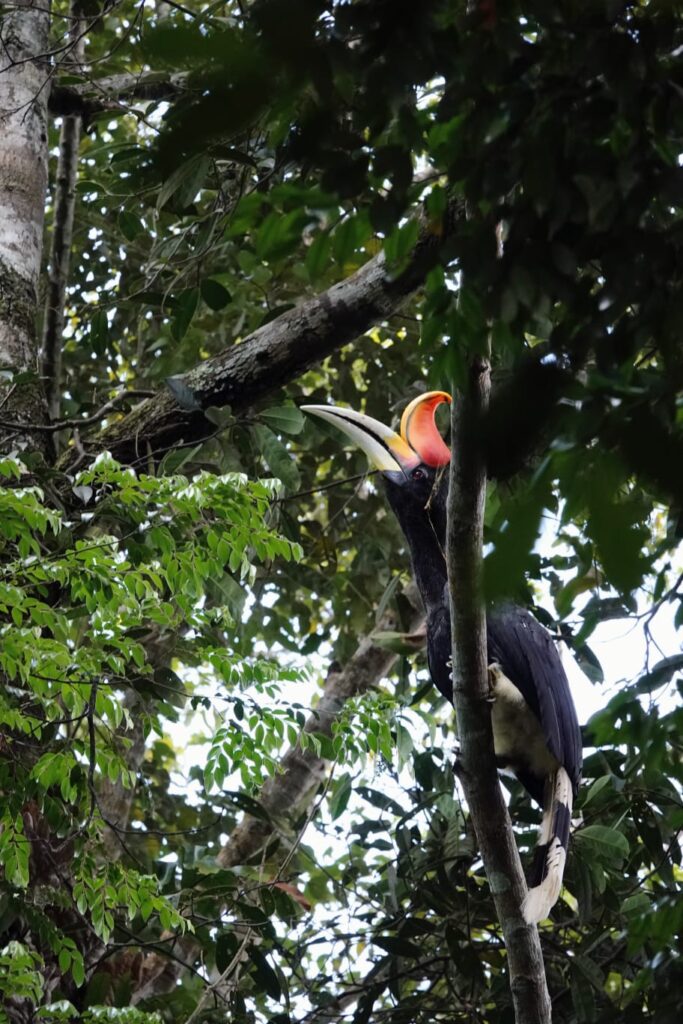
- Hornbills
Responsible tourism provides income for local communities while supporting rainforest conservation.
Ethical Orangutan Trekking Guidelines
When observing orangutans in the wild:
- Maintain a safe distance
- Never feed wildlife
- Avoid touching animals
- Follow guide instructions
- Stay on designated trails
- Choose ethical tour operators
Responsible travel helps ensure future generations can experience these remarkable primates.
About Sumatra Orangutan Tours
Sumatra Orangutan Tours is a local eco-tourism operator based in Bukit Lawang, North Sumatra.
Our experienced jungle guides lead ethical trekking adventures inside Gunung Leuser National Park, helping travelers observe wild orangutans while supporting conservation and local communities.
With small group treks, responsible wildlife practices, and deep local knowledge, we aim to provide authentic rainforest experiences while protecting the natural habitat of the Sumatran orangutan species.
Conclusion
The Sumatran orangutan species is one of the world’s most extraordinary primates and a vital part of Sumatra’s rainforest ecosystem. Despite facing significant conservation challenges, ongoing efforts by local communities, conservation organizations, and responsible tourism operators are helping protect the future of this critically endangered species.
For travelers seeking a meaningful wildlife experience, observing wild orangutans in Bukit Lawang remains one of the most unforgettable adventures in Southeast Asia.
What is the Sumatran orangutan species?
The Sumatran orangutan (Pongo abelii) is a critically endangered great ape found only on the island of Sumatra, Indonesia.
Where do Sumatran orangutans live?
They live primarily in the tropical rainforests of northern Sumatra, especially within the Leuser Ecosystem.
Why is the Sumatran orangutan endangered?
The main threats include habitat loss, deforestation, illegal logging, and human-wildlife conflict.
How many Sumatran orangutans are left?
Scientists estimate approximately 14,000 individuals remain in the wild.
What do Sumatran orangutans eat?
Their diet consists mainly of fruits, leaves, flowers, bark, insects, and honey.
Can tourists see wild orangutans in Sumatra?
Yes. Bukit Lawang is one of the best destinations to observe wild orangutans through ethical jungle trekking.
How intelligent are orangutans?
Orangutans are among the most intelligent primates and are known for tool use and advanced problem-solving skills.
What is the difference between Sumatran and Bornean orangutans?
Sumatran orangutans are generally slimmer, more arboreal, and more social than Bornean orangutans.
Why is Gunung Leuser National Park important?
It protects one of the largest remaining populations of wild Sumatran orangutans and other endangered species.
What is the scientific name of the Sumatran orangutan?
The scientific name is Pongo abelii.
Related Articles
- Orangutan Trekking in Sumatra
- Bukit Lawang Orangutan Trekking
- Best Place to See Orangutans in Sumatra
- Gunung Leuser National Park Guide
- Ethical Orangutan Tours