
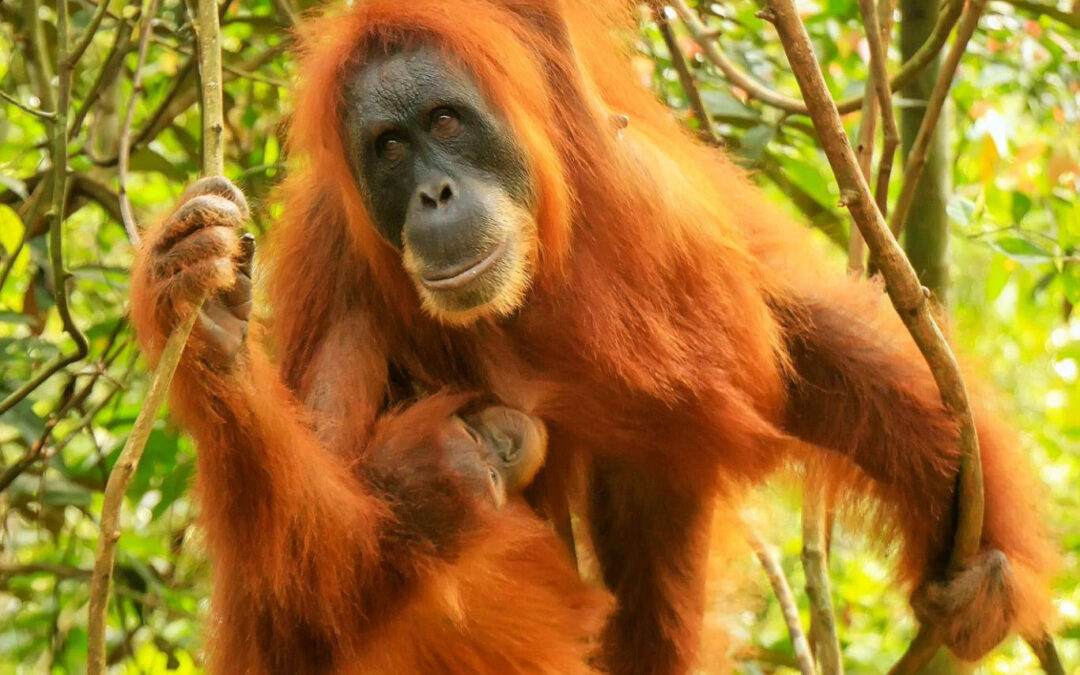
Best place to see orangutans in Sumatra often comes down to your travel style and a bit of luck in the wild. While Bukit Lawang remains the most popular gateway to encounter these incredible red apes, it’s far from the only option. Along the vast borders of Gunung Leuser National Park, stretching across North Sumatra and Aceh, there are several lesser-known destinations that offer equally rewarding and often more intimate jungle experiences. Leuser National Park in the provinces of North Sumatra and Aceh.
Most people who travel to Sumatra come in search of the elusive and famous Sumatra orangutan. These impressive red apes inhabit the rainforests of Sumatra. They are truly some of the most amazing animals on the planet.
From quiet, off-the-grid villages to lively trekking hubs, Sumatra offers a wide range of settings for your orangutan adventure, each providing a different atmosphere as you venture into the jungle.
Let’s take a look at some of the best places to see orangutans in Sumatra, learn a bit about our second-closest cousins, and find out how to be a responsible tourist when searching for them.
Special thanks to our friend Callum Muir for the stunning cover photo—captured during an ethical photography trek with Kubu Retreat, using a safe distance and a powerful zoom lens to ensure minimal disturbance to wildlife.
1. Bukit Lawang
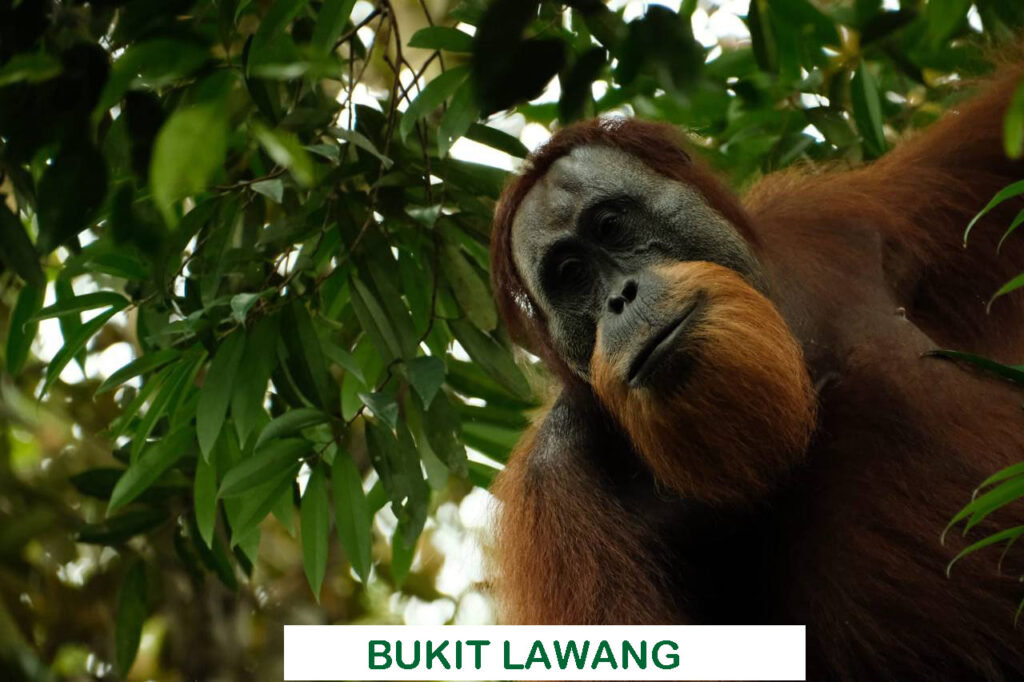
Bukit Lawang is widely considered the most well-known travel destination in Sumatra, and for good reason. It’s one of the few places in the rainforest where your chances of encountering an orangutan are incredibly high making it a favorite starting point for jungle adventures.
Around a three-hour drive from Medan, the journey is straightforward. (Find out more in our detailed blog: How to Get to Bukit Lawang).
Until 2005, Bukit Lawang functioned as a “soft release” area for rehabilitated orangutans. Rescued individuals were gradually reintroduced into the wild within Gunung Leuser National Park, where they were still monitored and supported by trained staff during their transition back to natural life.
They were fed daily on feeding platforms, which tourists could visit to see the animals up close.
Many of these orangutans eventually dispersed, but a small number stayed close to humans and are semi-wild (as in living free, but still seeking out food from humans). these individuals that you are likely to see when you head out on a shorter trekking from Bukit Lawang.
Although it’s fantastic for tourists to be able to meet these incredible apes in their habitat, their behaviour is not so natural and there are a ton of problems associated.
It is illegal for guides (and visitors) to feed or interact with the animals. The good guides don’t, but there are many who do.
Why does this matter? Because orangutans share so much of our DNA, they are highly vulnerable to human illnesses. Even something as minor as a cold or flu can be dangerous for them. In fact, in July 2018, a young orangutan died, an incident widely linked to excessive close contact with tourists, highlighting the serious risks of irresponsible wildlife interactions.
One of Bukit Lawang’s semi-wild orangutans is infamous; Mina, one of the original released animals is a feisty girl with a long history of aggression towards humans.
Many of the guides are scared of her and for good reason; she sends both locals and tourists to the hospital with a bite at least once or twice a year!
Some guides use her aggressive behaviour as an excuse to feed her, saying that if they don’t, she will attack them. But our experience from trekking with truly knowledgable guides is that she learns which ones will give her nothing and leaves them alone!
Bukit Lawang CAN be a fantastic place to view wild orangutans ethically. You can do this by choosing the right guiding company – find out how to do that in this blog all about Responsible Jungle Trekking in Bukit Lawang.
BATU KATAK
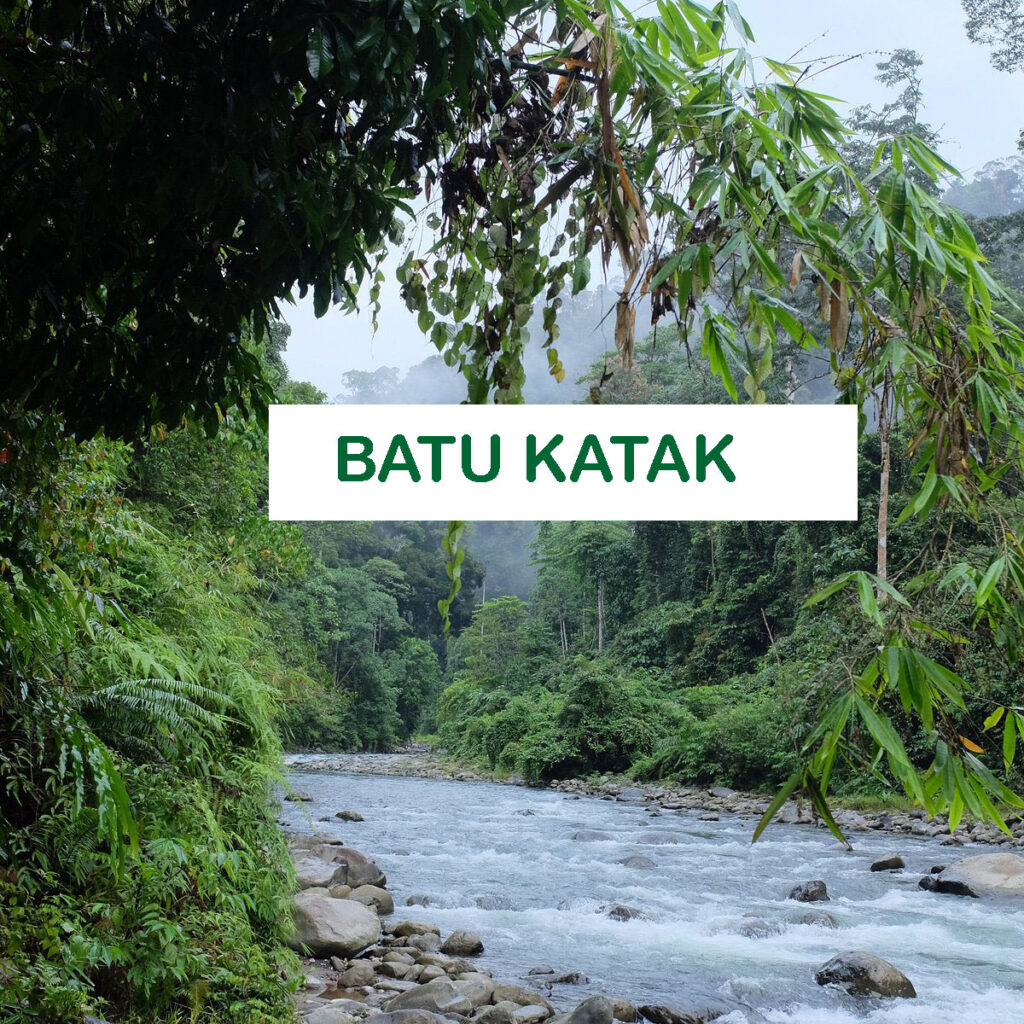
We have the inside scoop on a great village on the edge of the Gunung Leuser, only around 30 minutes by car or motorbike from Bukit Lawang Jungle Treks.
Batu Katak has none of Bukit Lawang hustle and bustle, restaurants, nightlife or development. What it does have is a charming, authentic village with a smattering of simple (but comfortable) guesthouses.
Spend a night or two here and go trekking, either into the karst forest – which is chock full of wildlife – or the national park.
While orangutan sightings are never guaranteed, your chances here are still very good. We’ve visited Batu Katak multiple times and have encountered an incredible variety of wildlife, Sometimes without even stepping deep into the jungle. The area is also home to the striking Siamang gibbon and even the elusive Sumatran tiger, making it a truly rewarding destination for nature lovers.
If you come at the right time, you can also see the world’s largest bloom – the Rafflesia – an amazing plant that is difficult to find anywhere.
BATU RONGRING
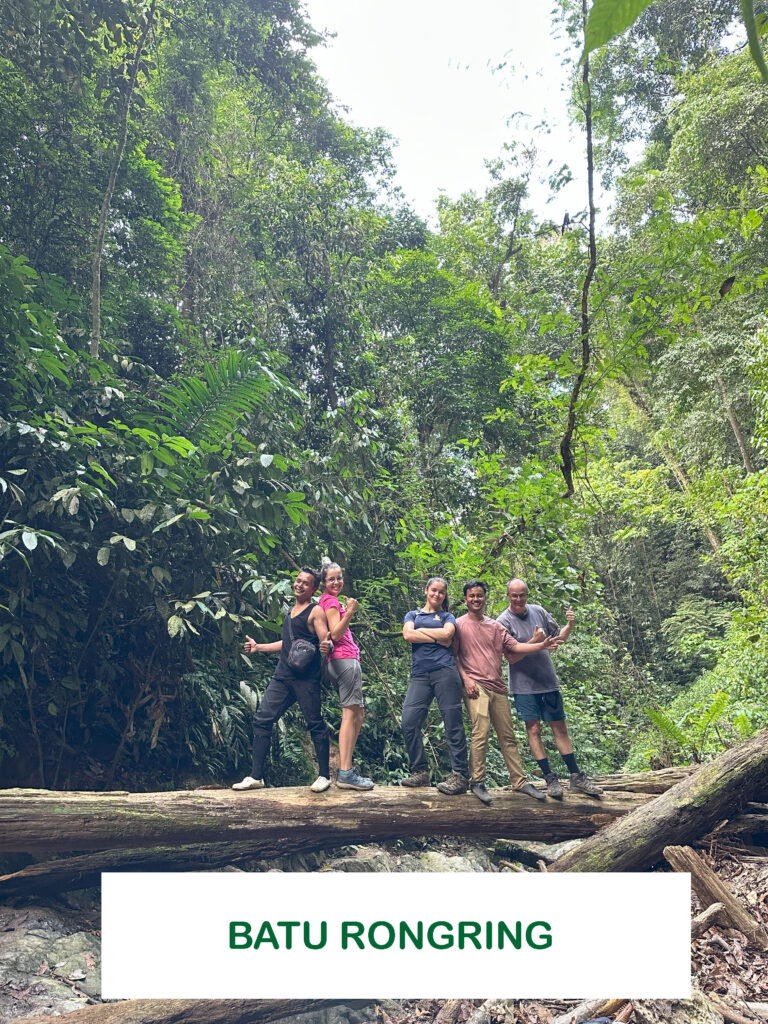
The virtually undiscovered village of Batu Rong Ring is another in North Sumatra. This is a very new tourist destination that is still growing, so it’s pristine and ripe for explore.
Halfway between Bukit Lawang and Tangkahan in North Sumatra, there is very little tourist infrastructure. This is a true, authentic village and jungle. The local guides are to sustainably growing, protecting and promoting their slice of paradise.
You have a decent chance of seeing orangutans here, depending on your luck, as well as hornbills, gibbons, range of other native wildlife a and leaf monkeys.
You have a decent of seeing orangutans here, depending on your luck, as well as hornbills, gibbons, leaf monkeys and a range of other native wildlife.
The area also offers a range of natural wonders, from fascinating caves to hidden waterfalls, all surrounded by pristine, untouched rainforest waiting to be explore orangutan.
Don’t come here expecting souvenir stalls, fast WiFi, or Western-style dining,instead, embrace the simplicity and enjoy a peaceful escape surrounded by pure nature.
Note on Responsible Ecotourism
Please always choose a responsible guide when you go in search of orangutans. Never encourage your guide to take you up close to these beautiful animals, as tempting as it may be.
Remember, you are in their home and you must respect them. Humans can pass on a multitude of illnesses to primates, some of which may prove to be fatal.
If you stop for a snack during your trek, take your rubbish with you; even if it’s organic. If you’ve been munching on some fruit and leave the skins or leftovers in the jungle “for the animals,” you may be leaving more than you bargained for in the way of germs and bacteria.
Few experiences compare to watching an orangutan move effortlessly and almost silently through the rainforest canopy above. Observe from a respectful distance, and admire these “people of the forest” just as they are meant to be wild, free, and undisturbed in their natural world.